• Skip to content
logo logo
  • Blog
Login SIGNUP

Cybersecurity Business

Hackers vs cybercriminals: Who they are and how to identify them

October 9, 2018 by HushApp Team

Hackers vs cybercriminals: Who they are and how to identify them

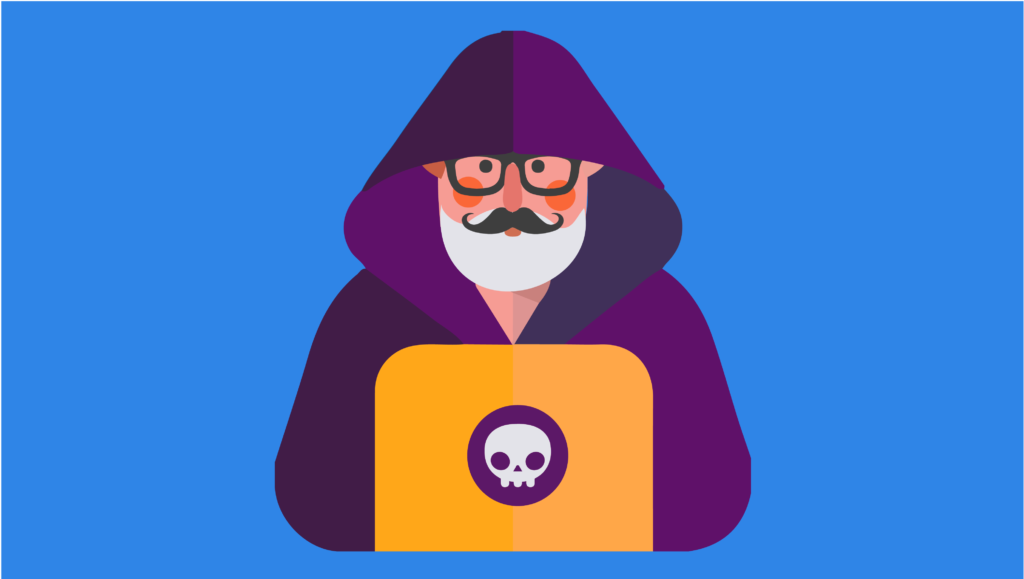
When we talk about hackers, many people imagine the typical image of a person (usually teenagers) hiding in a room behind a computer, typing indecipherable commands until getting ahold of any valuable information that seems impossible to access. The reality goes beyond this stereotype created by Hollywood, a hacker may be the person we least imagine and their motives can be different. Some hackers are not always focused on money. To determine the best defense to protect our information, it would be better to know who these people are and what motivates them to cause this type of damage.

The word “hacker” comes from the English word “hack” which means “to give an ax”. Originally, the term was used to describe the way technicians fix defective devices, but now, the word has evolved to acquire a negative connotation.

This connotation is clear that it is due to the serious damage that can occur to a person or a company, the main purpose for doing so varies.

Hackers vs cybercriminals

Adam Tyler, Innovation Director of the company CSID, explains that the profile of the current hacker is a young videogame aficionado, accustomed to Internet and social networks, who learns hacking as a personal challenge, the same way that they try to overcome a complicated video game.

This profile of hacker – which we already know – uses hacking for fun. Their motivation is not financial but a challenge to itself, rather achieving notoriety in its community. However when the game starts to be a business, then the rules change, or they skip.

As explained by Chema Alonso, CDO of Telefónica, “do not confuse a hacker with a cybercriminal, the second can enter systems with a purpose with a monetary objective or companies to steal information. Hackers, on the other hand, do it only out of passion and without the intention of doing harm. “

The profile of the hacker

Virtually anyone with access to the internet can learn to be a hacker. A survey conducted by a computer security company in Latin America, states that 76% of hackers are men whose ages are between 14 years (8%) to 50 (11%). The average age is 35 years (43%).

It is difficult to differentiate one from another, since many hackers end up being cybercriminals. Hackers are restless minds who are always looking for new ways to use technology. A poll of 127 hackers revealed that 51% of respondents said that their main motivation when launching cyber attacks is “the search for emotions”, while 18% point to economic benefits as a reason.

Another characteristic of cybercriminals is that they do not act alone, they can operate in large organizations around the world attacking approximately 600,000 times per day.

Cybercriminals carry out their attacks not only to obtain monetary gains and confidential information, but also to affect the reputation of the company and its brand. For example, interrupting digital services such as blocking access to emails or websites, among other types of attacks that affect the operating system of companies.

Types of cyber attacks

The type of cyber attack could determine the ideals or motives of the cybercriminal, the most common are:

Cybercrime: uses techniques such as phishing, steal the identity of people or companies to perform bank fraud, empty accounts, etc. This is generally for economic purposes.

Hacktivism: Is damaging pages of large companies or the government to make a protest. The objective of these cyber attacks is ideological and / or social. Most known within the hacktivists is the Anonymous organization.

Cyber ​​espionage: Compromises cybersecurity in companies. Since it deals with the theft of sensitive and valuable information, such as stealing private financial information from customers and employees, which then can be sold at very high prices on the black market.

Cyberterrorism: usually directed against governments or countries, affecting services such as health, defense, or infrastructure of great importance.

Types of hacker and how they operate

Each hacker has his way of operating. According to the actions he commits and the reasons he has, the most common classification is the following:

White Hat: The hero you who helps save you from cyber attackers, also known as “ethical hackers”, since they are people who work in computer security companies constantly looking for vulnerabilities to correct them.

Black Hat: This type of hacker is what we can define as a cybercriminal, he is the villain of the movie, they hack only for his personal interests. They use sophisticated techniques to access systems and steal data, destroy it or sell it on the black market.

Gray Hat: This person is a hybrid between the previous ones, because it is possible that he acts illegally but with good intentions. It can penetrate systems and disclose useful information to the general public, for example, accusing large companies of testing for the unauthorized collection of user data.

How do they choose their victims?

Hackers know who are the most vulnerable people for an attack. Their main targets are employees who have little knowledge about the proper use of computer systems. They also focus on hacking freelance workers, since typically these profiles consists of of people who have access to the systems of the company, but are not subject to corporate policies.

Why hack Social Networks?

Another favorite space for hackers are social networks. What do hackers look for in them? People using social media post photos, comments, new purchases etc. daily with family and friends. We are leaving information public to everyone, although it seems that it does not have importance, is of great value for cybercriminals. Since they can obtain a large amount of personal data and then use it in their favor.

Disseminate malwares sell our personal data, deceive users through phishing or other malicious actions that hackers can allow with all the information they get from our social networks.

How to recognize a cybercriminal in organizations

As we mentioned above, it is difficult to identify a hacker, because it could be the person you least expect. In spite of this, some characteristics could be taken into consideration in order to recognize a cybercriminal:

• A person with a high knowledge of computers and networks in general, such as, change of IP, use of Keylogger programs, use of unusual browsers, among others.
• People who take advantage of social spaces to ask about customer data and sensitive or restricted use information.
• They install spyware without authorization.
• Deactivate the antivirus software on the work equipment.
• They make use without authorization of computers or devices of the other members of the organization.
• Employees who work extra, beyond office hours without giving justification.

Although some features may be a bit exaggerated to justify the profile of a “possible” hacker, paying attention and getting to know the staff of the company does not hurt. The important thing is to ensure possible ways of where the attack may come.

Filed Under: Cybersecurity Business Tagged With: Black Hack, Cyber ​​espionage, cybercrime, cybercriminals, Grey hack, hack, hackers, Hacktivism, White Hat

What is Two-Factor Authentication and Why Should You Use it?

September 27, 2018 by HushApp Team

What is Two-Factor Authentication and Why Should You Use it?

Surely you have found more than one service that asks you to twice to confirm that you are really the one trying to access the content. This method is known as two-factor authentication, or multi-factor authentication because it is more than one test. Although this process may be a bit tedious, we will explain why it is necessary to apply it in each application that allows you to do so.

According to Wikipedia, ¨Multi-factor Authentication (AMF) is a method of computer access control in which a user is granted access to the system only after he or she presents two or more different proofs of who he claims to be, These tests can be a secondary password, digital certificate installed on the computer, among others.¨

The best known method is the two-factor authentication (A2F), which only requires two tests. Services that incorporate this identifying method into their system include ICloud or Gmail Outlook, cloud services such as Dropbox, OneDrive, iCloud PayPal, or social networks such as Facebook and Twitter.

Two-Factor Authentication and Two-Step Authentication

The basic authentication systems work with the typical user / password combination. The user that identifies you, and the password that authenticates who you say you are. However with the advancement of technology and cyber attacks, double authentication (or multiple factor) adds a more robust method to properly identify the user. For instance, a USB token, a coordinate card or even something more unique to authenticate the individual such as, a fingerprint, an iris, a voice or even the user´s  face.

It should not be confused with two-step authentication, since in this case two factors are used that add a second step to verify that you are who you say you are (such as when using a password and then a code that is sent by SMS or email). In the case of the A2F, different methods or tests are used that add on an additional layer of security.

Disadvantages:

Like any security system, it has its advantages and disadvantages, which must be considered when implementing. One of the disadvantages of double factor authentication is that if you misplace or lose your identifier, such as a token or coordinate card, then you will not be able to access the system. You will be forced to request it again.

Also in the case of two-step authentication, such as the one implemented by Google, a verification code is sent to an alternative device for the user to confirm in the case their email is locked out and to ensure that the user is legitimate. However, there is a risk that if this device is lost, the code can not be accessed.

How Secure is Two-Factor Authentication?

Although two-factor authentication has proven to be a breakthrough in terms of security, it still has its vulnerabilities. Recently the former hacker, now security consultant Kevin Mitnick explained that just by using a bit of social engineering, you can get sensitive data from a person.

Individuals must be diligent of the websites they are using even if they appear to be real. Investigating the website for any warning signs such as spelling issues in the domain. For example, Linkedln -with ‘ele’ lowercase instead of ‘capital letter’ is a red flag and could be a trick played by a hacker to get you to fill in your personal information. This would allow them in the future to be able to skip the two-factor authentication and gain access to any of your accounts. Therefore it is important to suspect any change, even the smallest, since it could be a fraud.

Adding two-factor authentication will not ensure 100% protection of your information, but it will reduce the chances of a cyber attack and make it much more difficult for the hacker. However, it depends on each person to implement it in all possible services. It does not hurt to have an additional layer of security to avoid any type of incident.

Filed Under: Cybersecurity Business Tagged With: 2FA, cyber attack, hackers, MFA, Multi-factor Authentication, social media, two factor authentication, Two-Step Authentication

9 Cybersecurity Tips to protect corporate email from possible cyber attacks

August 27, 2018 by HushApp Team

9 Cybersecurity Tips to protect corporate email from possible cyber attacks

Email is still the best way for companies to communicate today, it is the most convenient way to send and share files. However, it is important to use with caution because many cyber-attacks that occur in companies, originate in email. A prime place where cybercriminals can get information directly from employees. To make sure your email is protected, follow these cybersecurity tips to protect your corporate email.

9 Cybersecurity tips to protect your company’s email

  1. Must ensure your employees understand the risks of a cyberattack and how to be safe so companies can cybersecurity culture in the company.
  2. Do not use corporate email for personal purposes, to avoid getting additional opportunities for unauthorized people to invade a company’s system.
  3. In case you lose your password, link your email to another alternative account, preferably another from the company. Add double factor authentication for added security.
  4. Do not post your corporate email address in forums, social media, etc.
  5. Create email accounts for different tasks, for example, using an additional account to subscribe to new services where your security policy is unknown. Having multiple accounts decreases chances of getting hacked and losing private information.
  6. Watch where you access with your email: Do not open your corporate email from networks outside the company, in case you have to do so, open a incognito window and close all other sessions.
  7. Beware of phishing: an email with malicious content is designed to deceive you, so it is important to be alert to any fraud, and analyze its content: an unknown sender, files with double extension that usually are computer worms or Trojans, even some design change could be an indication of a phishing email. If you decide to open it, check it with an antivirus.
  8. Do not respond to spam emails, you can give clues to possible attackers or scammers.
  9. Send your encrypted files: use an application to protect your files. An option can be HushApp, with which you can send and share files in a easy and secure way, it uses end to end encryption. You can also send files to contacts that do not use the application and the information will remain protected.

There is no guarantee that you will have 100% security, cybercriminals use different techniques every time to violate the company’s confidentiality, taking advantage of informing employees on proper security measures will help reduce the chances of being hacked. Therefore, the best way to defend yourself is by being aware of the risks and taking all available prevention measures. From the most complex systems you can implement to simple practices, such as these cybersecurity tips to protect email.

Filed Under: Cybersecurity Business Tagged With: computer worms, corporate email, cyber attacks, cybersecurity, email, HushApp, phishing, Trojans

Cybersecurity for employees: Creating cybersecurity culture in your company

August 21, 2018 by HushApp Team

Cybersecurity for employees: Creating cybersecurity culture in your company

As much as companies invest in sophisticated security systems, it will not help if efforts are not focused on the most vulnerable points of attack: the employees. They are the ones who access and manage the company’s information, therefore, training in Cybersecurity for employees must be part of the company’s organizational culture.

There is no doubt that companies are the preferred target of cyber attackers. These criminals take advantage of the little knowledge and carelessness of employees. With just a click, they have the ability to access the confidential data of the company. Therefore, all employees must understand the risks that exist and that may affect not only the company, but themselves.

Achieving adequate training should not only be an IT department responsibility, rather the board of directors must lead the change and be the example to follow, so that the entire team can be prepared to face any attack.

Some tips to implement training actions in cybersecurity for employees could be:

Beyond all security systems that can be implemented by the IT department, it is about training the employee regarding the proper use of each electronic device available in the company.

It is essential that employees understand the importance of using strong and unique passwords, not to leave them in plain view of anyone, not to reveal them by any media. They can also be taught to use password management tools.

Train employees to recognize safe sites to navigate, (they can look for the S of the HTTPs protocol or the lock). They can also be prepared

Give HushApp a Try!
BOOK A DEMO
for some kind of phishing or performance simulation tests them to check if they are alert for this type of attack.

Establish policies for employee mobile device usage: many companies have increased the number of corporate devices to provide flexible schedules, therefore there should be policies established that include personal devices use, if they access the company’s networks or for work management.

Implement secure and easy-to-use encryption tools: part of every employee’s day-to-day work is to share and send information to other contacts: colleagues, customers, suppliers, etc. A simple activity but that could compromise the company security if if some precaution is not taken.

HushApp is a tool that will allow employees to send files in an easy and secure way. Since it uses end-to-end encryption, they can also send to other people (as customers for example) even if they do not have the application, and they will still be protected.

Involving employees in the training

Imposing rules and restrictions will not ensure that all employees abide by them. On the contrary, it would complicate access to information. There will be slower processes and therefore greater dissatisfaction among employees. The idea is that the experience is pleasant and it becomes a habit.

Large companies are making campaigns to raise awareness among their employees about cybersecurity issues, such as Facebook, which organizes programs such as “Hacktober”, a tradition designed to build and maintain conscious culture about cybersecurity.

Marketing campaigns with contests, workshops, lectures and even games that allow not only spend a pleasant time for employees but promote good practices in the field of cybersecurity.  

INCIBE Awareness Kit to start:

The National Cybersecurity Institute (INCIBE) has anon its website Awareness Kit that incorporates multiple graphic resources, interactive elements and detailed programming to improve companies’ IT security.

Changing the behavior of an organization should not be seen as a simple list of tasks to be done, it is about creating collective awareness about the importance of training in terms of cybersecurity for employees, understanding the risks and consequences, to avoid future financial or reputational damage to the company.


Filed Under: Cybersecurity Business Tagged With: cyber attack, cybersecurity, encryption tools, HushApp, IT department, phishing

5 Cybersecurity tips you need to manage your business social media

August 9, 2018 by HushApp Team

5 Cybersecurity tips you need to manage your business social media

Social media has transformed the way people communicate. Each of them generates more and more accounts every day, for its immediacy, its ease of use and other characteristics that as we all know, make us addicted to them. Companies know that social media is an indispensable channel to reach customers. The problem is that hackers find it easy to get your information if you do not take the appropriate measures of cybersecurity for your social media.

Social media sites are nearly completely public, once you post something it is permanent. In the business world, everything exposed in social media must be handled carefully, a couple of words in a tweet could cause serious negative impact on the reputation or even the finances of the company.

A careless community manager of a company can be responsible for writing a post without thinking or reading it before giving away private information, a disloyal competitor who wants to end their reputation or even a malicious computer criminal who pretends to supplant them, trying to cheat their followers using to their name.

It is not about blaming anyone, it is better to prevent this type of situation than have to deal with it afterwards. It is crucial to start with some basic ideas that can reinforce the protection of your social media.

5 tips of Cybersecurity for business social media

  1. Add two-factor authentication to your social media, do not stay with a single password, you can increase security by using a
    Start using HushApp today.
    SIGN UP
    second option with a personal question or by sending a password to a mobile device that you have linked to your social media account. You can also use it for your personal networks.
  2. Assign devices to management business social media: just like the two factor authentication, manage corporate networks from devices only destined to corporate accounts.
  3. Configure the privacy options of each network: each one allows you to decide what you want to show and what not.
  4. Control who has access to social media: The more people who have access to the company social media, the risk becomes greater, assigns administrators and controls their permissions and access, especially if this work is carried by an external person to the company. In the case of Facebook, you can assign different roles, be sure to eliminate access to former employees or former account administrators.
  5. The fundamental idea of business social media is to promote a product or service of your company, and thus have a closer contact with your customers. If you plan your marketing strategy well, surely you will have quite effective results, but do not forget cybersecurity. If you create a social media campaign, make sure that this information (arts, texts, special promotions, etc.) does not reach unwanted people before the time you decided to publish. Use applications such as HushApp, which will allow you to protect your files easier and safely, so that your campaign will be a success.

There is no doubt that social media has become an essential tool for companies, especially SMEs, but they are also a key focus for cybercriminals, the ideal is to use them responsibly to ensure the success of the company in the digital world.

Filed Under: Cybersecurity Business Tagged With: business social media, cybersecurity, HushApp, marketing strategy, privacy options, social media, two factor authentication

The best cybersecurity practices in the advertising world

July 31, 2018 by HushApp Team

The best cybersecurity practices in the advertising world

Advertising agencies are becoming the focus of hackers. For example WPP was targeted by a cyber attack last year, which cost this multinational ad agency about 17 million euros. Agencies of all sizes, even boutique ones, are under attack. The reason why agencies are so attractive to cybercriminals is mainly due to the amount and type of confidential data they handle on behalf of their clients. Therefore, if the appropriate cybersecurity measures are not applied, it can result in damage to your customers and their brands.

As you know, an online marketing campaign requires very specific planning, both to carry out market research and to develop an advertising strategy. It generally includes content to be developed in tools such as social networks, email and other marketing actions to attract potential customers.

In many cases, advertising agencies compete with each other to get an important brand account. During this process, confidential proposals are exchanged which, if they fall into the hands of the competition, can mean the loss of the client, with the consequent economic impact. That is why it is important to ensure the protection of this type of files.

It is also important to secure the creative pieces, before they are approved and go out to the public. It is regrettable that this type of sensitive information reaches the hands of hackers or unfair competitors, and that the losses have a negative impact on the income and the reputation of the agency.

Some risks that may occur are:

During the market investigation it will be necessary to share sensitive information with customers, this information will determine the effectiveness of the campaign. If these data are not sent with the right tools, they could easily be vulnerable to falling into the wrong hands, including competition.

Creative content and its tools: Content marketing is fundamental in a campaign. To do this, the agencies use content management tools such as WordPress, which allow them to create content periodically (in blogs, for example) and keep information about the company updated.

Because of its ease of use anyone with a basic knowledge can manage a WordPress account, and if not properly protected, a hacker could access the site and use it to their liking, even distributing malware to users.

Email is also widely used by agencies for targeted email marketing campaigns to contacts and customers. If a cybercriminal manages to access one of these accounts, he could not only have access to the contacts of the company, but could also send fraudulent or virus-infected emails, which would result in the company’s website or emails being blocked by the clients’ servers, and poses legal, reputational and financial risks.

Social networks are also an easy and vulnerable way to attack, and in addition you should be especially careful with the information that is published in this way, because of the ease and speed of dissemination that they have, they could also be channels of distribution of false information.

To avoid reaching any of the situations mentioned above, some basic cybersecurity measures to protect the information of a marketing campaign could be:

Cybersecurity measures to apply to online marketing:

– The fundamental thing is to use a strong and unique password that is difficult to guess, for each of the services mentioned above. It’simportant to set a different password for each tool, including each social network. 

Let’s encrypt together.
FIND OUT MORE

– It is also important to periodically perform all updates to each service.

– You should avoid connecting to public Wi-Fis if you are going to use this type of tools, since the data that is being sent at the time of publication does not have the needed level of encryption protection.

– In the case of email marketing, you can use software that offers monitoring.

– Ensure that personnel who have access to these tools are aware of the threats that exist and the security measures that must be applied.

– When you need to share sensitive files that compromise the research or business proposals that you do, use applications that allow you to encrypt the information from the moment you send it until it reaches the recipient. With HushApp you can send documents easily and safely, even if your recipient does not use the application.

Cybersecurity is an issue that should concern all business sectors, it is important that all company personnel are aware of the dangers of a cyber attack. In the case of the marketing sector, where the activity is mostly online, the dangers are much more likely, taking the measures and using the right tools, you can successfully reach your ideal customers.

Filed Under: Cybersecurity Business, Sin categorizar Tagged With: cyber attack, cybercriminals, cybersecurity, email marketing., market investigation, online marketing campaign, WordPress

Technology as a tool to help protect your online privacy

July 25, 2018 by Frederic Thenault

Technology as a tool to help protect your online privacy

It’s no secret that technology has made us more connected but also more vulnerable. To regain our online privacy, there are different complimentary methods. One way is to limit our online exposure by avoiding to post personal info. However, since we can’t practically live in a cocoon, we might as well embrace the power of technology by using it to better protect our digital lives.

As the founder and CEO of a cybersecurity company, I spend a considerable amount of my time focused on ways to protect both the online privacy of my customers, my team, and my own. It’s a bit like the surgeon who has seen so many car accident injuries: I am on guards for whatever new way hackers are inventing to steal people’s personal and professional information, and in awe of the damage they can inflict to someone’s reputation, financials, business and family. While we look for new ways to protect from new attacks, it’s also astounding how well-known “old” attacks are still in use, because so many people still are either not much aware of the online dangers, or forget to use basic protection means.

Of course each day it’s becoming less likely not to have at least some kind of awareness (think of the headlines about cyberattacks) and yet many individuals and even some companies think it won’t happen to them…until it does. In fact, most companies don’t find out until 6 months after the facts, that they have been hacked.

The two dimensions of data protection and online privacy:

There are two main dimensions to data protection and online privacy: one is to protect the perimeter, i.e. not to let the bad guys into your house, by locking the windows, the doors, and having good walls (that would be the real life equivalent of firewalls and intrusion detection systems). This is hard and in fact the bad guys tend to be one step ahead. The other dimension would be making sure that each of your precious jewelry is protected by a separate vault, and that only you have the key to each vault. Simplifying a bit, this is the real life equivalent to data protection via encryption.

The good news is that so far it’s the good guys who are winning the encryption battle. Of course there is a caveat: it depends what type of encryption you use (algorithm, key length, etc.) and how you implement it. Continuing the analogy: you should have a vault that is thick not thin, that has a sophisticated lock not a basic one.

Encryption: a strong tool for your online privacy. Now it’s even easy to use!

It used to be that using encryption was a hard thing to do, and thus only reserved to geeks. This was the traditional conundrum between security and convenience, where security traditionally came at the cost of usability. And we all know that if something that provides security is hard to use, people end up not using it and reverting to easier, less safe behaviors. Not any more. Several cybersecurity companies are working at making the life of their users both more secure and still very easy. It’s our case too.

At Syneidis we have created HushApp, which allows any user, without needing any technical skill, to easily and safely store any file (whether photos, PDFs or financial excels) in a very safe digital box, where each one is protected separately. It also allows sharing files in an easy way via the web, but with the important extra layer of protection, transparent to the user, which ensures that only the intended recipient, and no one else, will be able to watch the private information. This is of course one example only. Besides protecting your file, one should consider using a VPN, a firewall, etc.: security is a global matter and no one solution could cover all the angles.

People are the weakest link in online privacy protection. Are you?

In fact, while we ought to embrace technology tools that allow us to protect our online privacy, we need to be aware that unfortunately the weakest security link still tends to be…people themselves. So please be among the prudent ones: do you really need to post that photo on Facebook, which will tell burglars that you are not at home? Should you really send this excel with financial data by email or via some free cloud service? Should you really sync my phone camera’s gallery to Apple or Google clouds? I’m sure you know very well the answer to these three questions…But there are many more…How well would you fare on a cybersecurity awareness test? You can find out here with this short test whether you are an expert or a dummy in online privacy.

Kind regards,

Frederic Thenault

Read more related articles here.

Filed Under: Cybersecurity Business Tagged With: Cyberattacks, cybersecurity, cybersecurity company, encryption, online privacy

Cybersecurity tools to improve the work of a private detective

July 11, 2018 by HushApp Team Leave a Comment

Cybersecurity tools to improve the work of a private detective

The work of a private detective is no longer as it was before. With the rise of information technology and, in turn, of cyber attacks, research professionals must employ cybersecurity tools that help their clients obtain and protect their information.

Beyond the typical image that the cinema sells about private detectives and their grand adventures, in their day to day they also carry out simple research work for companies, professionals and individuals. For all three, the level of confidentiality and sensitivity of the information they handle is quite high.

Suspicious behavior, false statements in an insurer, and robberies by fellow employees, are just some examples of cases that are handled daily by a company’s private detective. If these situations are not handled correctly, they can be discovered by a third party and have far reaching consequences from reputation to finances.

What a private detective needs today

The main thing a private detective needs is right skill and attitude to help their client make the right decision, even when cases are complex.

Being observant, meticulous, discreet, patient and having a strong ethical background, are undoubtedly fundamental when practicing this profession. The researcher must also be able to treat information as confidential, in addition to having knowledge of the laws and procedures associated with the protection of customer data. This is where it is very important to use the correct cybersecurity tools to manage of data.

Part of a detective’s job is to analyze people and evaluate the information obtained about them. This work should be reinforced with technological skills and the proper use of electronic equipment, taking into account that digital files may be vulnerable to possible cyber attacks.

Accuracy is an additional skill that a private detective must possess. Keeping detailed records of his work and protecting it is essential, especially when considering his work will generate a large number of reports and documents.

Most of the cases of private researchers require field work, that is, moving is part of their day to day. This makes it necessary to use technology to send information to their customers and securely store photographs or videos made with their mobile devices, among other things.

Cybersecurity tools to improve the work of the detective

There are basic tools for a private detective to perform their work effectively, such as: a computer, a mobile phone, a camera, etc. It is important that the technology is up to date, and that the information store within is protected.

Using encryption systems can be a great option when protecting the information of a case, both on the part of the detective and the client.

Applications such as HushApp can help private detectives protect the confidential information of clients in an easy and safe way. It allows the sending of encrypted files in an agile manner without requiring client having to register in the application.

A private detective, like other professionals who handle highly confidential information, must have certain special attitudes and abilities. Adding technology and the best tools will improve the effectiveness of their investigations for their clients.

Filed Under: Cybersecurity Business Tagged With: confidential information, cyber attacks, Cybersecurity tools, encrypted files, private detective

How can my online law firm achieve reliability?

July 5, 2018 by HushApp Team Leave a Comment

How can my online law firm achieve reliability?

Having an online law firm requires adapting to new technologies and new populaces. As long as there is a sector that does not trust to contact via internet, another important group will seek to solve their legal problems, often through the Web itself.

Both groups share the same concerns, the confidentiality of information and the agility with which their case is resolved.

The environment faced by online law firms

To achieve trust and agility in customer service, this type of law firm must adapt to needs that arise in the digital environment:

– New business models and new legislations adapted to the field.  

– Changes in the customers’ demands, who are growing increasingly used to the speed of online procedures.

A new lawyer’s profile, with the ability to take their work to digital transformation.

Regulations on the protection of personal data (GDPR for example).

The cybersecurity of the information handled by the office.

Some aspects to consider to improve the trust in an online law firm could be:

Access: Clients seek accessibility and flexibility from the lawyers, new technologies can help the firm to improve its services, using tools that allows them to connect them easier and faster with customers: video calls, text messaging, cloud storage and other online transfers are some examples, always taking into account the security measures necessary for its use.

Globalization: The advantage of being an online firm is having the option of reaching a wider audience far beyond theits geographical area where it is located,  locationas well as facilitating contact with those who are nearby,  which would allowallows them to save hours of travel, traffic, and money.

Do not lose personal contact: It is important not to lose personalized treatment, although technology allows work to speed up. In addition,  clients should contact the lawyer easily, and generate more confidence.

Digital and secure solutions: It is also necessary to use technological tools to streamline the management of internal work to in order to facilitate communication and ensure the protection and security of customer files. It is important to implement a system that allows the encryption of the files that contain customer data andwhile implement forensuring a secure file exchange.

Applications such as HushApp can help online law firms to protect the confidential information of their clients,  in an easy and secure way. Since it allows sending encrypted files easily and there is no need for the client to sign up.

Having an online law firm should not represent a threat to the safety of customers. , otherwise, tThe good use of digital tools will generate an approach to them,offer them an approach which will allow you to adjust to each of your needs. The most important thing is to have the right channels to earn their trust.

Filed Under: Cybersecurity Business, Sin categorizar Tagged With: encryption, encryption system, exchange files, lawyer, online lawyer, protect files, send documents, send files securely, share documents.

6 tips to protect intellectual property on the internet

June 26, 2018 by HushApp Team Leave a Comment

6 tips to protect intellectual property on the internet

It is not an easy task to protect intellectual property, and as an artist, the internet can be a double-edged sword. On one hand it is a way of diffusion assured to announce your work, but on the other hand, you also run the risk of coming face to face with one of the greatest fears of any creator: the violation of your copyright.

Surely you have heard this debate between content access and copyright protection. On one side many people are in favor of diffusion and against intellectual property. This camp argues that art should be shared with society otherwise it would not be art, but what about the rights of an artist? How can you protect your creativity and effort?

It is important to know the rights you have regarding the intellectual property of your work and how you can protect it.

What is intellectual property?

The intellectual property right affects unique creations, but not industrially or in a series produced, it reflects the personality and spirit of the author. These are personal and/or patrimonial rights that protect your creation, guaranteeing its disposition.

It can be applied to everything involving creative works such as: literary works, theater plays, films, artworks, drawings, paintings, photographs, sculptures, architectural designs, softwares, and video games among other thing.

Certain topics like ideas, procedures and operation methods are excluded from this right. In addition, the protection begins during the work’s inception, and lasts throughout the life of the author up until 70 years after he/she’s death.

Each country has its copyright laws, and although they are similar, it is important to know what they are and how they register your work. In Spain, for example, one of the most important is the SGAE.

On the internet, the artwork has more reach and it is more difficult to control, so what can you do to protect intellectual property on the internet?

Tips to protect intellectual property on Internet

If your artwork is digital (graphic design, illustrations or digital photos) or physical (paintings or sculptures) it is advisable to have a digital photographic record. In both cases, you can follow these simple tips.

1) Use Creative Commons for non-commercial use
It is essential for published images on a web page to maintain a Creative Commons license for non-commercial use. This means that while everybody will be allowed to download or make changes to the image they cannot legally publish or take credit for the image or changes made to it.

This is the most restrictive option of Creative Commons. In addition to Creative Commons, there are other licenses where you can define handling and modifications of images by another user while continuing to protect your authorship.

2) Convert images to Flash
This option does not allow you to download or copy photos from the web before uploading the images and converting them into flash slides. This is done through a special converter or by hiring a web designer.

3) Watermark your images
Use a watermark with your logo or name on the image, you can also add the symbol © or the abbreviation “Copr”, with the year it was made. Try to make it visible, so that it can not be edited or cut easily. Although some artists do not like to add it for aesthetic reasons, it will make it clear who the author is.

Showing your work to clients:

If you want to send your works directly to a client, you are also running the risk that they may plagiarize your work or get it into the wrong hands, in this case, you could take other measures to reinforce your security:

4) Sample images and low resolution:
In addition to applying watermark or grant Creative Commons licenses, you could send some samples in low resolution, you may lose quality, but at least you keep the work’s essence. Another suggestion is to select some images and give them other licenses less restrictive to share with customers.

5) Send your works with secure applications:
Another danger of sharing artwork online is that they could be intercepted by a hacker and reach unwanted hands. One way to send your digital creations to specific customers is by using tools that allow you to send files in a secure way, using encryption systems that guarantee your files reach the recipient you choose.

With The HushApp, you can select your artworks with the original quality, send them to your client, even if they are not a user of the application, you only need to add their email address. Due to its end-to-end encryption technology, there is no way for anyone to access the files, except you and the recipient.

It is difficult to protect intellectual property in a globalized world where laws change constantly, but at least you can take measures to clarify your authorship and control their diffusion.

Filed Under: Cybersecurity Business Tagged With: copyright, copyright laws, intellectual property, intellectual property on Internet, Protect artworks, protect designs, protect files, Protect intellectual property, send files, share files

  • « Previous Page
  • Page 1
  • Page 2
  • Page 3
  • Next Page »
logo HushApp made in EU

HushApp allows to protect and send files safely without complications, in any platform. Sign up for HushApp and enjoy the peace of mind of end-to-end encryption.


Product
Features Pricing Android App iOS App coming soon Web App
Users
Book a demo FAQ Guide Support
Business
Hush for Business GDPR Use cases
About
About us Jobs Terms of Use Privacy Policy Legal
This website uses cookies to improve your experience. We'll assume you're ok with this, but you can opt-out if you wish.Accept Read More
Privacy & Cookies Policy
Necessary Always Enabled