• Skip to content
logo logo
  • Blog
Login SIGNUP

personal data

Everything you need to know to have a cybersecure trip

July 23, 2019 by HushApp Team

Everything you need to know to have a cybersecure trip

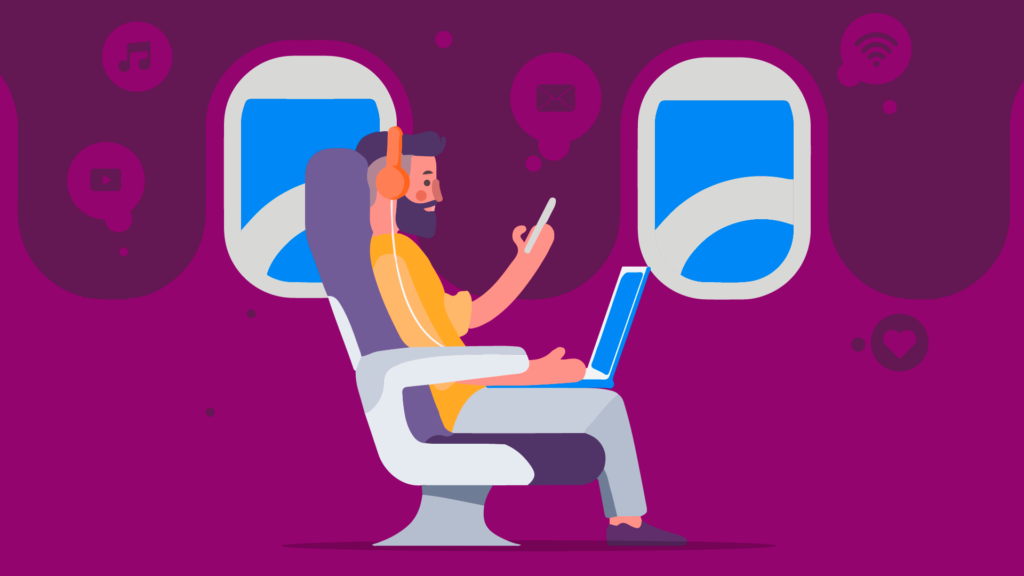
Cybersecurity is a subject that must be taken seriously at all times, even when you take a trip. When organizing your vacation, it is important to take into account all of the necessary safety precautions in order to have a cybersecure trip.

Usually we take our mobile devices everywhere and tend to use them often, both at home and at work. During this time one rarely stops to consider that we will be in areas that do not offer the same level of security that they were expecting. This means that if certain precautions aren’t taken, one could easily become the next victim of a cyberattack.

You don’t need to cancel your well-deserved vacation, just follow these simple tips and enjoy your experience from start to finish.

Tips for a cybersecure trip

1. Block your devices.

The first recommended measure is the simplest. Block your devices with the options available to you, using either a PIN number or a fingerprint ID. While traveling, change them regularly.

2. Be cautious of public Wi-Fi.

When traveling, we are always looking for a Wi-Fi connection. This is why it is important to exercise caution with free access networks as they tend to be the most dangerous. It is best to use Wi-Fi encrypted and to ask the hotel about the security protocol they use before connecting.

3. Avoid accessing your personal data in non-secure connections.

If it is necessary to use a public Wi-Fi connection, avoid accessing personal accounts or confidential data while you are connected to that network. Do not make purchases online or click on advertising banners, and if possible, try not to consult bank accounts.

4. Disable automatic connection.

Most phones, tablets and computers have a configuration that allows you to automatically connect to Wi-Fi networks available in your area. This exposes you to unsafe internet connections without you even knowing it. Before traveling, change this setting so that you must connect your devices to the internet manually.

5. Share your location in a limited way.

It is common to use social networks to share your location with your followers, this can be a threat to your safety. Pointing out your location can signal to criminals that you are not at home or at the hotel where you registered. Limit the information you publish online to avoid these types of threats.

6. Deactivate Bluetooth connectivity.

Like automatic Wi-Fi connectivity, Bluetooth connection can also be a risk. Bluetooth signals can come from anywhere and if your device has it on, nearby attackers can access your mobile. Keep your Bluetooth disabled as much as possible while traveling abroad.

Cybersecure trip for business people

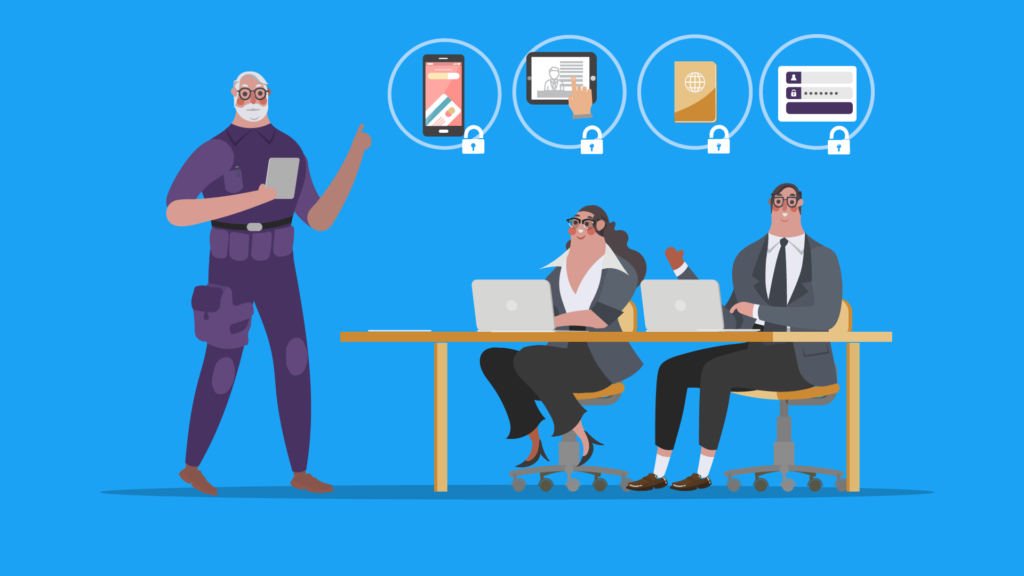
Business travelers are more vulnerable to a cyberattack due to the fact that they handle confidential information for companies, information that could be very valuable to cybercriminals. In their daily work inside or outside the office, they share sensitive organizational information. If the necessary measures are not taken, it could have serious financial consequences.

If you are an executive on a business trip, some measures to have a cybersecure trip are:

  • Share your files from secure applications
    If you need to share or send files from abroad, you should use an application with encryption system such as the HushApp. This will allow you to do send easily and safely from anywhere you are.
  • Install and update the operating systems and your antivirus license
    This is a measure that must be taken inside and outside the home. Make sure you have installed a protection system on your computer. In addition to keeping it and your operating system updated, this level of security applies to applications on your mobile as well.

Take your devices that do not store confidential information and only the necessary documents that you want and need to work with.

International regulations

In addition to implementing these security measures, be aware of laws and regulations involving cyber security in each country you plan to visit. Remember that when we travel we are subject to their legislation.

A suggestion to reinforce your security is to buy a data plan to use to in your destination country, even though it may be limited. This will allow you to check messages, confirm check-in times and keep up to date with other important issues

Whether you are a frequent traveler or not, for business or pleasure, do not let your guard down in terms of cybersecurity. Following these smple steps will allow you to enjoy your trip without compromising your personal or business information.
Filed Under: Cybersecurity Business Tagged With: business travelers, cyberattack, cybersecure trip, personal data, protect files, public Wi-Fi

Encrypting files: What kind of information should your company protect?

June 12, 2019 by HushApp Team

Encrypting files: What kind of information should your company protect?

Every time it becomes more common to hear that a company must pay a fine for not complying with data protection regulations in Europe in particular, the GDPR has become one of the major concerns of organizations. It is clear that data should be protected, the question is, what should we protect? And also, why encrypting files is the best way to protect your company?

Frauds, phishing, cyber attacks, data leaks, malware, among others, are terms that are becoming increasingly common; they are attacks to which any company or person is exposed to suffer at any time. To understand the consequences of this type of attack, you have to understand the causes of the problem, the information that the company deals with and how it is handled.

Personal data and privacy

Although it is not the only information that a company should protect, it can be considered the most valuable and at the same time vulnerable data that an organization manages. It is about everything that concerns the identity of a person, whether public or private, and each one decides whether it can be shared or not.

Everything that refers to personal data such as: contact data, physical characteristics, data related to your assets, biometric information, professional training, including ideological information, sexual life or ethnic origin, among others, refers to information that if reach the wrong hands, It could affect their reputation or safety.

It is not only about personal information but also about confidential information of the company that is also susceptible to a security breach and could cause serious financial problems.

What should be done with the information obtained?

It is the responsibility of the company to safeguard the integrity of the people from whom it handles such information. This refers to any type of action taken with these data: the way it is collected, processed, stored, transferred or even destroyed.

Therefore, the procedure should be:

  • Know the type of information handled.
  • Classify it according to its value, if it should be public, private and above all, who will have access or not.
  • Identify which are the possible threats and the possible consequences.
  • Apply the necessary tools for the protection of information, especially the most confidential one. In this step is where encrypting files is useful.

Encrypting files: Classification and examples of information that must be protected

Some examples of information that must be protected with encryption systems can be:

– Company files: sensitive data for the company such as business secrets, bank documents, including passwords that give access to confidential documents, corporate devices, credit cards, market studies, etc.

In the case of personal files could involve employees, customers or any other person related to the company. Some examples include:

– Employee files: personal data of employees (such as those mentioned above), identification documents, medical reports, etc.

– Client files: Identification documents, payment data, contact data, among others.

In the case of clients, it is important to understand the obligation to protect the data they are offering and should be used only for the purpose they decided. Therefore, if you are requesting a client’s email to subscribe to the company’s newsletter, it should be used only for that and not for other purposes. For example, to promote other products of another company, since this can be sanctioned in many countries.

Why encrypt the files?

Encrypting your files can be one of the best options to protect the sensitive information of a company. Nowadays, the most used and effective method to protect your data is an encryption system, in which you can secure that information is completely protected.

It is important to highlight the level of security offered by an encryption system. It is a much more powerful tool than a password since they only protect access. Encryption protects data directly, making it impossible to see the contents of files.

Encrypting files easily with HushApp

To comply with all data protection regulations that each country requires, it is important to use the appropriate security tools.

That’s why we introduce you the HushApp. It is a safe alternative to other file submission services, since it facilitates the daily protection of company data and helps safeguard your customer’s sensitive information.

How? Implementing high-level encryption methods in a simple and transparent way for the user without affecting the efficiency of business processes. Security, usability and a good user experience are all our priorities.

Using HushApp you will have the opportunity to offer additional value to your customers, protect your own confidential information and allow your work team to perform easily and safely actions.

We invite to try HushApp …

Filed Under: Cybersecurity Business Tagged With: confidential files, cybersecurity, data protection, encrypting, encryption, GDPR, HushApp, personal data, privacy

logo HushApp made in EU

HushApp allows to protect and send files safely without complications, in any platform. Sign up for HushApp and enjoy the peace of mind of end-to-end encryption.


Product
Features Pricing Android App iOS App coming soon Web App
Users
Book a demo FAQ Guide Support
Business
Hush for Business GDPR Use cases
About
About us Jobs Terms of Use Privacy Policy Legal
This website uses cookies to improve your experience. We'll assume you're ok with this, but you can opt-out if you wish.Accept Read More
Privacy & Cookies Policy
Necessary Always Enabled